Iran war triggers supply shortage, forcing Baltimore to cut back on fluoride
Published in News & Features
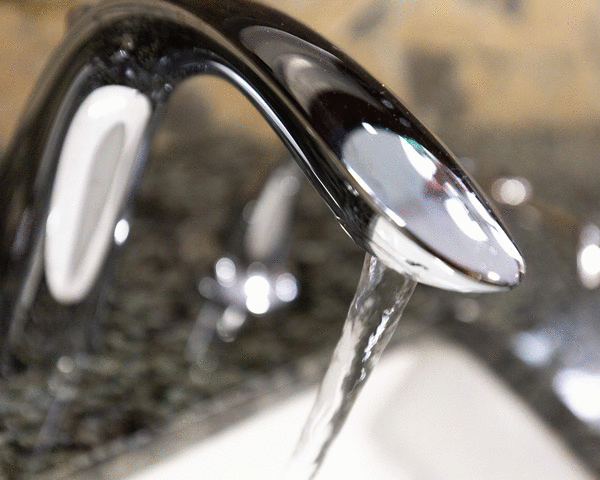
BALTIMORE — Drinking water in Baltimore City will have its fluoride levels lowered by 42% this week due to supply chain issues caused by the war between the U.S., Israel and Iran, according to a news release.
The Baltimore City Department of Public Works announced that, beginning this week, fluoride levels in the city’s drinking water will be lowered from 0.7 mg to 0.4 mg per liter at the Ashburton and Montebello filtration plants. This change will affect Baltimore County and Howard County as well. WSSC Water, which serves Prince George’s County and Montgomery County, also lowered its drinking water’s fluoride levels last week.
What’s driving the shortage?
The change was forced by national supply chain challenges for hydrofluorosilicic acid, which is used for water fluoridations. Officials from WSSC, which is one of the largest water and wastewater facilities in the country, as well as Baltimore Public Works, point to the U.S.-Iran war as one of the drivers for the shortage.
According to studies from Market Reports World and Trend Economy, China makes up 60% of hydrofluorosilicic acid exports. The ongoing conflict between Iran, Israel and the U.S. has resulted in the disruption of shipping through the Strait of Hormuz, limiting China’s ability to shop material to North America.
Another war-related impact comes directly from the Middle East. DPW officials say one of their suppliers in Israel has seen significant disruptions in its operations due to the war.
“This is an adjustment driven solely by supply availability,” DPW Director Matthew Garbark said. “We remain committed to providing safe, high-quality drinking water.”
WSSC Water announced that its 1.9 million customers in Montgomery and Prince George’s County will also see the same reduction of fluoride in its drinking water on April 7.
“This is a temporary adjustment driven solely by supply availability,” WSSC Water’s Director of Production Ben Thompson said. “We remain committed to maintaining safe, high-quality drinking water and will restore optimal fluoride levels as soon as supply conditions stabilize.”
Recommendations made
DPW recommended residents, and their children, consult their dentists or health care provider for alternate sources of fluoride while the shortage is in effect.
There are no federal or state requirements for fluoride levels, but the naturally occurring mineral is known to prevent cavities, reduce chances of tooth decay and strengthen teeth according to the American Dental Association, Centers for Disease Control and Prevention and the American Academy of Pediatrics.
States like Florida and Ohio have floated the idea of banning fluoride, while Utah has outright banned fluoride last year.
_____
©2026 Baltimore Sun. Visit baltimoresun.com. Distributed by Tribune Content Agency, LLC.






Comments