Quiet malls, smaller budgets lead to subdued Black Friday
Published in Business News
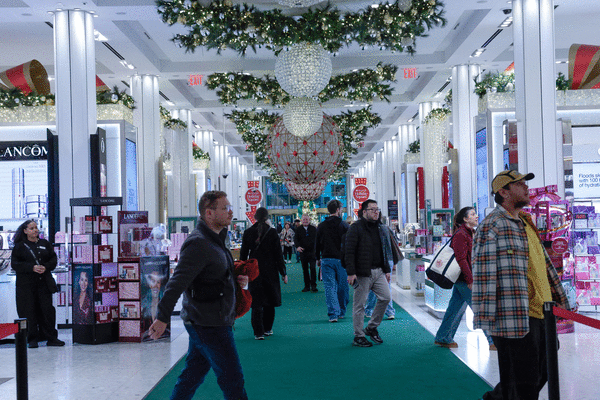
At a luxury mall in downtown Manhattan, security guards outnumbered shoppers. Parking spots were easy to come by at malls in the New York suburbs. And a shopper at a Walmart in Chicago said her holiday budget had been cut in half.
Black Friday got off to a slow start as shoppers knocked people off of their gift lists, pared back on big purchases and traded down to cheaper items.
At Macy’s Herald Square in Manhattan, sales associate Mary Ding — who’s worked Black Friday for the past eight years — said lines didn’t seem as long as in previous years, with rain deterring some shoppers. The stormy weather that postponed the Macy’s Thanksgiving Parade dragged into the morning.
Consumers were looking for “deals on top of deals,” according to Kayla Pinto, 28, who’d driven to the Kittery Premium Outlets in Kittery, Maine, from her home about 45 minutes away.
Even brands like Alo, Levi’s, LoveShackFancy and Adidas struggled to lure shoppers into some of their stores.
“We don’t have a lot of money especially with everything going up,” Carla Baeza, who was shopping at a Walmart in Chicago said. Baeza was stocking up on a 15-pair pack of socks for $5, and has cut her overall budget from $2,000 to $1,000.
As U.S. consumers headed into Black Friday, many planned to shop with strategies to spend less. “Before it was well, ‘what do you want?’ Now it’s ‘what do you need,’” said Laura Forbes, 46, shopping at Costco in Springfield, Virginia.
At the Mall at Short Hills in Millburn, New Jersey, Rose Lora, 22, was also planning to be more careful this year. “We’re still gonna buy gifts for people, but we’re definitely gonna be just a little bit more cautious with money,” Lora said.
Still, higher prices and earlier-than-usual deals on holiday staples mean many consumers are likely to end up spending more.
Total holiday spending is expected to climb by 5.4% this year compared to 2025 — or 2.8% excluding inflation, according to PwC. On Black Friday alone, Americans are expected to spend almost $13 billion in online transactions, data from Adobe Analytics shows.
Shoppers say they’re prioritizing gifts that will keep them away from screens: puzzles, knitting supplies and experiences like concerts, travel and spa days that they can share with loved ones. Second-hand shopping is also on the rise: 40% of consumers are looking for more resale and vintage deals, up five points from last year, the PwC data shows.
Tarsha Rice, 51, isn’t planning to buy new electronics this year. “We’ll accessorize. Ordinarily we might upgrade,” she said. Rice has cut her spending by 30% to 40%. “Just looking at these prices, it’s definitely not the same spending power,” she added. She got to Target in Falls Church, Virginia, this year at around 12:30 a.m., waiting in line for the store to open.
“We’re like oh man, here comes Christmas,” she said.
“Black Friday traditionally relies on a lot of impulse buying — people sort of snapping up deals when they see them,” said Neil Saunders, managing director of GlobalData. “Even though the discounts will be there, they’re starting from a higher original price point in a lot of cases.”
The biggest U.S. shopping season comes after tech issues affecting flight systems, communications servers and banks sent some consumers into prepper mode. Major retailers like Walmart Inc., Costco Wholesale Corp. and Tractor Supply Co. saw panicked shoppers stocking up on essentials like bottled water, generators and even camping equipment.
Purchases of household essentials soared in the first few weeks of November, with spending on cleaning products, personal hygiene supplies and baby items all up by more than 30% compared to the previous month, according to Adobe Analytics. It also left some shoppers disappointed before the main discounts had even started.
For the first time since the pandemic, fewer shoppers are expected to turn out for the holiday shopping weekend, according to the National Retail Federation, as early and spread-out deals tempt consumers to start spending well before Thanksgiving.
More than 80% of shoppers surveyed by the organization were planning to manage their costs, including by choosing cheaper gifts and buying for fewer people.
The Alo store inside the Shops at Columbus Circle in New York City opened an hour earlier than usual in anticipation of Black Friday crowds, but at around 10 a.m. there were more employees than customers on the shop floor.
Employee Nena Lassi, 19, said she expected a surge of shoppers in the late afternoon. The trendy athleisure retailer is offering 30% off everything.
Dale Yuzuki, 63, was planning to buy a generator in the Black Friday sales and had set up alerts to help him track the best deals. But after anxiety spread among people worried about more outages and the potential for widespread blackouts, the model he was eyeing went out of stock.
“There is kind of a rush on the generator model I was looking at,” said Yuzuki, who lives in Potomac, Maryland. “For me there wasn’t any urgency.” If the generator comes back into stock after the discounts have ended, Yuzuki will still go ahead and make the purchase, he said.
More consumers have started making their shopping plans earlier this year, according to Kiara Barrett, global head of thought leadership at Circana. “They’re being much more intentional with their list making, with what they’re searching for, and then they’re waiting for the deals to fall in line” to actually check out, she said.
Even going into Thanksgiving, shoppers were prepared: Walmart said on Nov. 19 that it had sold 1 million more turkeys than at the same time the previous year, with analysts crediting low prices for its growing share of the grocery market. Chief Financial Officer John David Rainey said the trend can be a sign that consumers will show up early for rest of the holiday period.
Kelsi Jackson, 33, bought a new refrigerator in early November, as soon as Black Friday deals dropped at Lowe’s Cos. Her old fridge had problems for a while, and by the beginning of the month was barely holding out. She’d browsed prices earlier in the year, but decided to wait “until the sale to really buy it,” she said, snagging about a 36% discount.
Slowing spending
There are signs Americans may be starting to slow their spending going into the key shopping season, which accounted for almost 20% of annual retail sales over the past five years. Inflation-adjusted consumer spending was little changed in October after a strong third quarter, suggesting households took a breather just before holiday shopping got underway.
Spending had held up for much of the year, bolstered by larger-than-usual tax refunds, stock-market gains and relatively low unemployment. But consumers are now contending with renewed price pressures, including higher food and energy costs, that are eating into household budgets.
Wealthier households are likely to drive much of the holiday spending growth, the NRF said, while many others plan to cut back on gifts and look for bargains. In a survey from the Conference Board, only those making at least $200,000 a year indicated they plan to spend more than last year.
———
(With assistance from Julia Fanzeres, Kristina Peterson, Daniela Sirtori, Josyana Joshua, Ann Gehan, Annie Bang, Erika Tulfo and Max Rivera.)
©2026 Bloomberg L.P. Visit bloomberg.com. Distributed by Tribune Content Agency, LLC.









Comments